" The odd truth is that my first-grade classmates could have become bilingual, in the conventional sense of that word, more easily than I."
To me, this quote is saying that the kids in his school had more resources than he did which meant that they could have bridged the language gap more easily than he did by simply learning some Spanish. But since Spanish, in the authors words, is a "private language" that is lower on this hierarchy of language that we as a society have created all of the pressure and responsibility was his. He had to learn the English language in its entirety. No one met him in the middle.
" One night his children and even his wife helplessly giggled at his garbled English pronunciation of the Catholic Grace before Meals."
This quote explains why the authors father became a lot more reserved when in situations that called for using the English Language. He felt embarrassed and even the people closest to him made him feel bad about the way he spoke and didn't take him seriously so he just stopped talking. This is one piece of the larger and more dramatic change that took place in the authors family and home life when his teachers conveyed to his parents that the children needed to practice their English at home. It changed the close dynamic that they had with their parents and with each other.
"So they do not realize that while one suffers a diminished sense of private individuality by becoming assimilated into public society, such assimilation makes possible the achievement of public individuality."
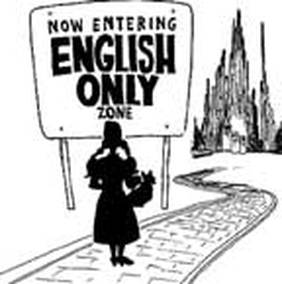
Advocates of bilingual education argue that students should not have to give up their native languages. It takes away from the diversity of the environment and it isn't fair to make children give up such an important part of who they are, which includes where they come from and how they communicate. Rodriguez argues that while that might be true, assimilating into the predominant or more socially accepted culture is the only way that they can fit in and become a part of the larger society. He argues that maybe assimilation is not as bad as they think. (Article that explores this more in depth: Assimilation Is Not A Dirty Word) If students continue to speak in their native languages it can further divide them from other students. Having a more uniform or creating language standards for everyone to abide by may just make everything easier.

I really like that you chose all of the quotes that you did, especially the second one. It makes me wonder, how many people that are learning another language feel silenced because they are poked fun at for their accent? most of the time it’s done in good fun, but perhaps the other person doesn’t take it that way, becomes embarassed, and ultimately ends up like Richard’s father. I have definitely teased friends in the past for their accents (all in good fun), but seeing the effects of that makes me wonder how I may have hurt another person without even realizing it, and perhaps it made them feel silenced.
ReplyDeleteI actually agree a lot with your response to the last quote you used, I feel like advocates of bilingual education shouldn't be deprived of their first language when learning to adapt to an American society. It's very unfortunate.
ReplyDeleteI love the image you used. I feel that it really drives the message home while being a great visual.
ReplyDelete